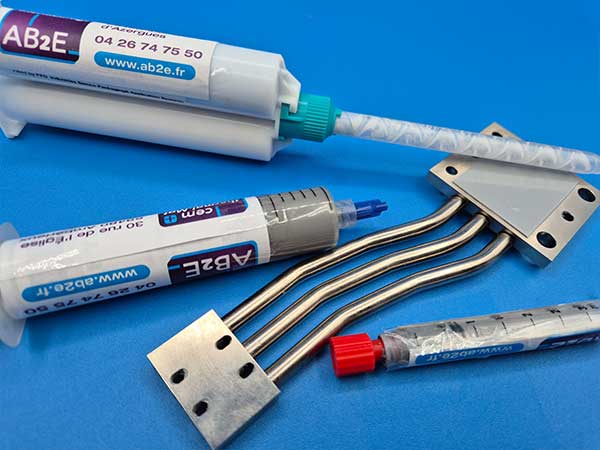
Thermal grease (or thermal paste) plays a crucial role in the performance of electronic devices. This often underestimated substance is essential for heat transfer between internal components. There are several types of thermal greases. Each has unique properties. This composition allows it to fill the microscopic surface imperfections. The performance of a thermal grease is measured and expressed in watts per meter-kelvin (W/m*K). The application of thermal grease is a very delicate step. Excessive quantity can hinder thermal conduction. While an insufficient quantity can create hot spots on the CPU. A common method is to apply a small amount to the center of the CPU and use either a spatula or card (type CC) to spread the paste evenly over the entire surface. Some will prefer the ‘pea’ or ‘line’ method, where a small amount is deposited in the center without additional display, leaving the heat sink to press and spread the paste during its installation. Major drawback of thermal grease, over time it can dry out or degrade, reducing its effectiveness. It is advisable to replace it every 2 to 5 years. The sign indicating the need for replacement is an increase in the T° of your equipment. In applications mechanically exposed to shocks and vibrations? greases are not recommended. They are particularly suitable for stationary applications. Laptops, PCs, graphics cards, CPU coolers… Thermal grease containing metal compounds, can be harmful to the environment. It is therefore important not to throw it in ordinary household waste