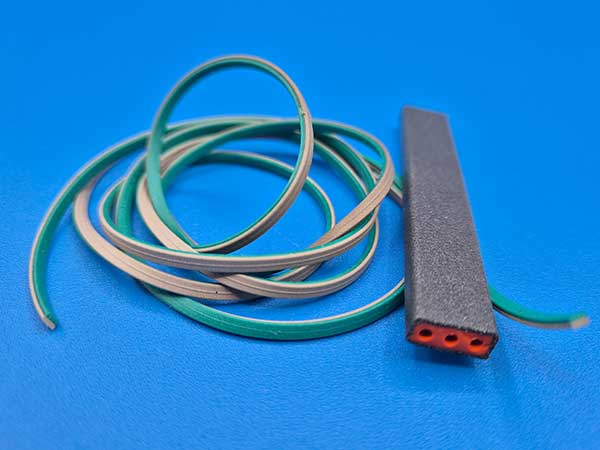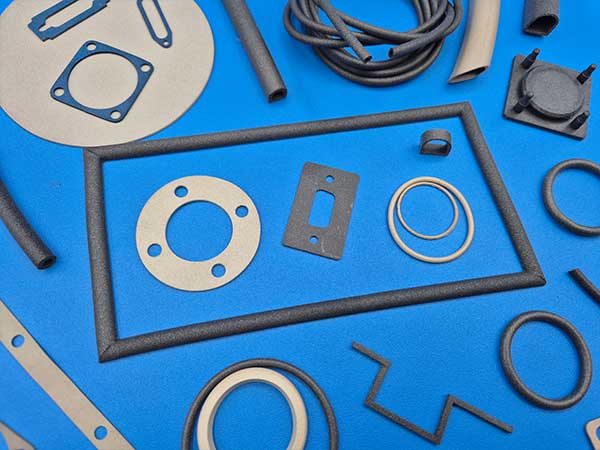
Conductive silicones are composed of a mixture of silicone or fluorinated silicone and conductive metal particles made in an agitator. The particles can be either silver aluminum, silver copper and/or nickel-plated graphite for the most frequently used. These seals come in several forms. They have a temperature range identical to that of «conventional» silicone said unloaded. They have excellent resistance to residual deformation after compression. Fluorinated silicones have a very good resistance to hydrocarbons, oils and solvents more generally therefore to «aggressive» media. These seals «mounted» in groove can be suitable for IP68 with a good recommendation. We also offer Ni/GR seals with the UL94V0 standard and the associated yellow card. The manufacturing processes used are compression molding or extrusion of hollow or solid rope profiles. They are then cut to the required length and then joined («planed») end to end by vulcanization (hot bonding). This hot bonding avoids hard spots and therefore leaks. These processes make it possible to offer a set of tailor-made solutions with short delivery times.