
3D Printing of Hyper-Frequency absorbers
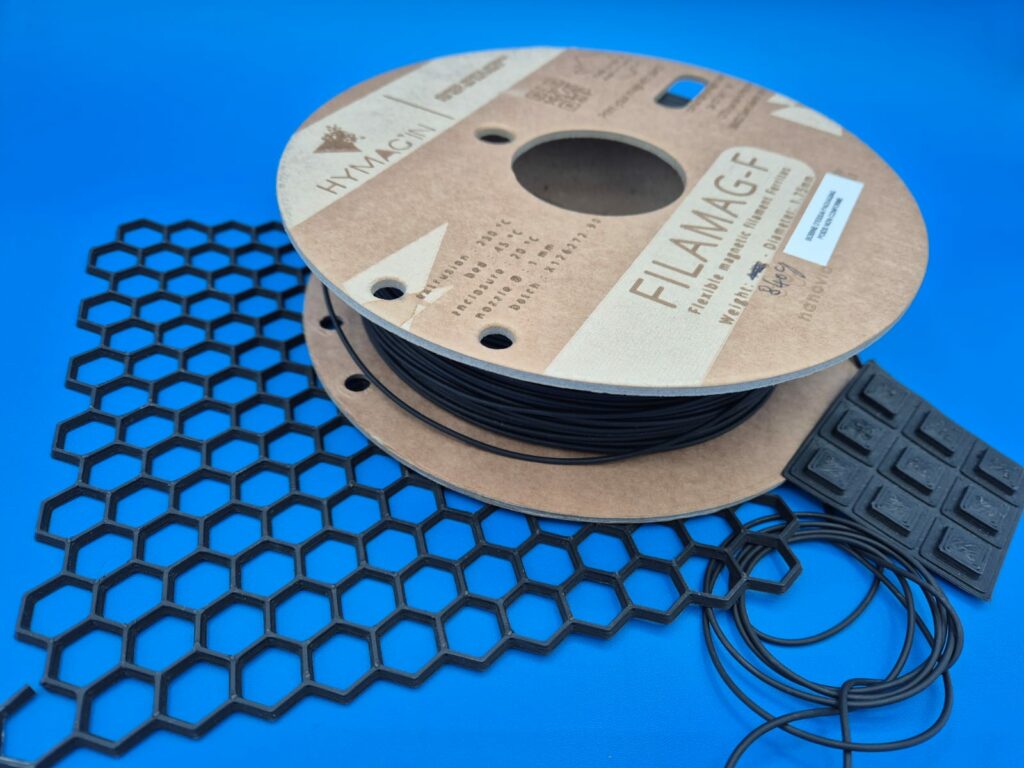
AB2E now offers 3D printing of Hyper-Frequency absorbers to complete its range. In partnership with a French company. It is possible to print various pieces with a standard dimension of 20x20cm and more upon request. This printing can be done by you or ours. The absorbent properties are similar to those we offer in plate. When the absorber material is used in radomes & power supplies, they improve the antenna design by suppressing reflected signals and absorbing surface currents. Microwave absorbers will help reduce unwanted reflective signals in wireless housings. Radio systems combine different frequencies that can interfere in unity. The absorbent materials are then able to suppress crosstalk and separate RF sections in a metal case. As for aerospace applications, they have very specific requirements due to extreme environmental conditions. At high altitude and with the use of specific liquids, great attention must be paid to absorbent materials. Indeed, they can be used indoors or outdoors (elastomeric bases were preferred). Polyurethane materials can be equipped with a specific coating to withstand many fluids that are often specified in the CDC. . Aerospace systems are always equipped with a variety of communication systems and RF probes in a wide frequency range. Our absorbent materials can be tailored to specific operational frequencies, crosstalk between antenna systems is a typical application that requires an absorbent material.
RF/ Hyper-Frequency Absorbers

AB2E offers absorbent materials covering a wide range of µ-wave applications. These products are available based on different base materials, modified to obtain absorption properties. There are 2 main areas of application to these products. Wireless and mobile communications & telecommunications evolve with new technologies very quickly. Our products are applied on disk antenna radomes, power supplies and LNB, Wlan, Satcom… When absorbent material is used in radomes & power supplies, they improve the antenna model by removing reflected signals and absorbing surface currents. Microwave absorbers will help reduce unwanted reflective signals in wireless enclosures. Radio systems combine different frequencies that can interfere with the unit. Absorbent materials are then able to remove crosstalk and separate the RF sections into a metal housing. Aerospace applications have very specific requirements due to extreme environmental conditions. At high altitude and with the use of specific liquids, great attention should be paid to absorbent materials. Indeed, they can be used indoors or outdoors (elastomeric bases were preferred). Polyurethane materials can be equipped with a specific coating to withstand many fluids that are often specified in the CDC. Aerospace systems are always equipped with a variety of communication systems and RF probes in a wide frequency range. Our absorbent materials can be adapted to specific operational frequencies, crosstalk between antenna systems is a typical application that requires absorbent material.
Moulded & Cut Elastomer Seals
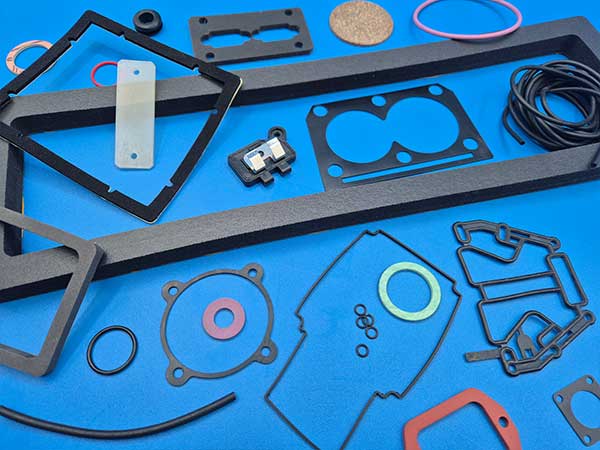
AB2E offers a wide range of products for environmental sealing (IP). To do this, we offer elastomers ranging from 20 to 80 shore A. These elastomers can be O-rings ranging from small series to large. The joints can also be in the form of cut-to-plan joints in line with your CDC. These seals can respond to heat, natural aging, light, ozone, chemical resistance and aggressive fluids (hydrocarbons/oils…). They are intended according to their characteristics specific to all applications: industrial, medical, food, civil, railway, aeronautical or military. Our design office can help you define the most suitable product for your needs and size it with you. Sealing is found in most applications in 2 forms. The first: «static» sealing: when the parts in contact are motionless in relation to each other. The second is called «dynamic»: when the sealing surfaces are mobile (linear or rotating movements between them). We can provide you with adequate solutions to these complex seals.
Non-UL Filtration or Cellular Foam

AB2E has been transforming cellular materials, more often called foams or cellular foams, for almost 20 years. Their hardness is always expressed in kg/m3. A very flexible foam will be a few tens of kg/m3, while a hard foam will be expressed in hundreds of kg/m3. AB2E transforms and cuts these technical foams as described above. We integrate the majority of processing modes including adhesivage (or adhesion) & different types of cutting (oscillating blade, knife) as well as digital milling. This variety of know-how allows us to understand almost all requests for parts or supplies of cellular materials. By the extent of the know-how and the variety of materials appear a multitude of parts like: joints, self-adhesive strips, anti vibration pads, shock absorbers, sealing parts, facade joints, acoustic joints, sound insulation panels, filters or custom technical cushioning… Wherever you are looking for flexibility, insulation, sealing, cushioning, protection, we will find you a solution based on foams.
Foam UL 94 HF1/ Filter Media

Polyurethanes, thermosetting polymers result from the reaction of the chemical polymerization of an isocyanate with groups carrying a mobile hydrogen (mainly hydroxyl groups). To obtain alveolar materials, this exothermic reaction must be coupled with a gaseous release (chemical or physical). This allows the creation of gas cells in overpressure within the polymer (thus its expansion) as long as the polyurethane is not completely polymerized. The final properties of polyurethane foam depend on the chemical components (DMI isocyanate di phenylmethane), the blowing agent, the process conditions (T°, pressure, humidity) and the nature of the mould facings. Thanks to the constant development of new formulations (new monomers, catalysts and additions of other substances), polyurethanes are today manufactured with a wide variety of textures and hardness. AB2E offers this high quality flame retardant crosslinked filter foam. This product meets Underwriters Laboratories Inc. UL 94 HF-1 self-extinguishing flame safety standards (UL No. provides). It is obtained by a thermal cross-linking process and impregnated in a bath in order to obtain a fire retardation. These filter media designed with calibrated and open cells offer regular filtration. The volume of these foams does not vary in the presence of liquid except with certain solvents. Filter foam also meets European RoHS standard. Our foam offers strong dust resistance and low air resistance. It is generally installed in electronic, computer, telecommunications, medical or industrial equipment. There are many applications: Air filters, ventilation duct… The UL 94 is a standard small-scale vertical flame test. The UL 94 is a small-scale vertical flame test. It is specifically designed to test the flammability of plastic parts used in appliances. It is not intended to reflect the hazards presented by the material we have described under actual fire conditions.